By  Best IRS Tax Refund · Last updated
Federal tax brackets tax your income in layers, so only the dollars inside a higher bracket are taxed at that bracket’s rate. Moving into a higher bracket never makes your whole income taxed at the higher rate, and a raise never leaves you with less take-home pay overall. Your refund is a separate calculation: what you paid in during the year minus your total tax.
Brackets and refunds in 60 seconds
- Marginal rate: the rate on your last taxable dollar. This is your “bracket.”
- Effective rate: your total tax divided by your income. It is always lower than your top bracket.
- Refund: payments minus total tax. Your bracket affects the tax side, but withholding decides whether you get money back.
Refund = total payments − total tax. Payments are the federal income tax withheld from your pay, estimated payments and refundable credits.
Total tax is what you owe after the standard or itemized deduction and your credits.
If payments are bigger, the difference comes back to you. If tax is bigger, you pay the difference. To test your own numbers, try the IRS Tax Withholding Estimator and follow the line-by-line Form 1040 instructions.
Last updated: November 21, 2026.
Most people never see this calculation. Your W-2 shows what was withheld, the return works out the tax, and the software subtracts one from the other. Here is the order a filer works through it:
- Add up total income. Wages from your W-2s (box 1), plus interest, side income and any other taxable income.
- Subtract adjustments. Items such as student loan interest or IRA contributions come off total income. The result is your adjusted gross income (AGI).
- Subtract the standard or itemized deduction. Pick whichever is larger. What is left is your taxable income.
- Work out the tax. Apply the tax tables or rate schedule for your filing status to taxable income.
- Subtract credits. Credits reduce the tax itself, dollar for dollar. Nonrefundable credits stop at zero tax. Refundable credits can go further, so many filers count them with payments in the next step.
- Add up payments already made. Federal income tax withheld (W-2 box 2), estimated payments and refundable credits.
- Compare. Payments above your total tax are a refund. Payments below it are a balance due.
Results vary by situation, and rules and amounts change by tax year. Check IRS.gov or a tax professional for your own return.
The refund formula in short
- Payments: federal income tax withheld (W-2 box 2), estimated payments, refundable credits.
- Liability: tax on taxable income, minus credits.
- Refund: payments minus liability. A negative result is a balance due.
- Social Security and Medicare withholding do not count toward it.
A worked example, step by step
Illustration only, not a prediction for your return. The numbers are round and made up. Say a single filer, tax year 2026, earned $50,000 in wages, claimed $1,000 of student loan interest as an adjustment, took the $16,100 standard deduction and qualified for a $500 nonrefundable credit. The tax uses the 2026 single rates of 10% up to $12,400 of taxable income and 12% above that. Their employer withheld $4,000 over the year.
| Step | Line | Amount |
|---|---|---|
| 1 | Total income | $50,000 |
| 2 | Minus adjustments | −$1,000 |
| 2 | Adjusted gross income | $49,000 |
| 3 | Minus standard deduction | −$16,100 |
| 3 | Taxable income | $32,900 |
| 4 | Tax ($1,240 + 12% of $20,500) | $3,700 |
| 5 | Minus nonrefundable credit | −$500 |
| 5 | Total tax liability | $3,200 |
| 6 | Federal income tax withheld | $4,000 |
| 7 | Refund ($4,000 − $3,200) | $800 |
Change only the withholding to $2,700 and the same return shows $500 owed instead. The tax did not change. Only the amount paid in advance did.
Notice how each step moves the result. The $1,000 adjustment and the standard deduction shrink the income that gets taxed. The $500 credit takes a full $500 off the bill. Withholding then decides whether that bill turns into a refund or a payment.
How federal tax brackets work
The US uses a progressive system with seven rates: 10%, 12%, 22%, 24%, 32%, 35% and 37%. Each rate applies only to the slice of taxable income that falls inside its range. The first dollars you earn are taxed at 10% no matter how high your income climbs.
Here are the lower brackets for tax year 2026 (the return you file in early 2027), as published by the IRS and summarized by the Tax Foundation. Amounts are taxable income, after deductions.
| Rate | Single | Married filing jointly |
|---|---|---|
| 10% | Up to $12,400 | Up to $24,800 |
| 12% | $12,401 to $50,400 | $24,801 to $100,800 |
| 22% | $50,401 to $105,700 | $100,801 to $211,400 |
| 24% | $105,701 to $201,775 | $211,401 to $403,550 |
The 32%, 35% and 37% brackets sit above these. Head of household filers have their own thresholds, so check the IRS table for your filing status. Rules and amounts change by tax year.
Notice what the table says about the “bracket” you hear people name. A single filer with $60,000 of taxable income is “in the 22% bracket.” Only the part above $50,400 is taxed at 22%.
Marginal vs. effective tax rate
Your marginal rate is the rate on your next dollar of taxable income. Your effective rate is total tax divided by income, which is the average you actually pay. The effective rate is always lower than the top bracket, because the lower layers were taxed at lower rates.
Use the single filer from the worked example (tax year 2026, illustration only). Taxable income was $32,900, so the marginal rate is 12%. Tax before credits was $3,700. That is about 11.2% of taxable income, and about 7.4% of the $50,000 of total income. After the $500 credit, total tax of $3,200 is about 6.4% of total income.
So the person is “in the 12% bracket” but pays far less than 12% of what they earned. That gap is normal.
Will a raise leave you with less take-home pay?
No. Take a single filer with $50,400 of taxable income. The tax is $5,800 ($1,240 plus 12% of $38,000). A $1,000 raise lifts taxable income to $51,400. Only that extra $1,000 is taxed at 22%, which adds $220. Total tax becomes $6,020.
The filer keeps $780 of the raise as far as federal income tax goes. Payroll taxes of 7.65% take a bit more, and your state may too. You still come out ahead. A raise can reduce pay only when it knocks out a credit or benefit that phases out with income, and that is a separate issue from the bracket itself.
Do tax brackets affect your refund?
Indirectly. Your brackets help set your total tax, which is one side of the refund formula. The other side is what you paid in during the year. A higher bracket does not shrink a refund by itself.
Withholding is where it goes wrong. Your employer estimates your tax from your W-4 and pay, and the estimate does not know about a second job, side income or a mid-year raise. If your income rises into a higher bracket and withholding does not keep up, you get a smaller refund or a balance due. Employers also often withhold a flat 22% on bonuses. If your actual bracket is 12%, that overshoots and the extra comes back as part of your refund.
Deductions and credits matter because of the bracket. A deduction saves your marginal rate on each dollar. A $1,000 deduction saves $120 at 12% and $220 at 22%. A credit takes off the full amount regardless of bracket. For a rough check on how these combine, try a tax refund calculator before you file.
Bracket figures are for tax year 2026 and may be adjusted for later years. This is general information, not tax advice for your situation.
Withholdings Explained
When you work for an employer, a portion of every paycheck is sent to the government before you see it. The IRS wants tax collected steadily through the year rather than in one lump in April.
The amount is an estimate of what you will owe by year-end. Your employer builds it from the W-4 you filled out: filing status, jobs in the household, dependents, other income and any extra withholding you requested. Since 2020 the W-4 no longer uses exemptions, so if your payroll setup dates from before that, or from a major life change, it is worth checking. Keep your W-4 current so the withholding matches your real situation.
How Withholdings Are Determined
You may or may not know which tax bracket percentage you are in. Even if you do, your paycheck probably loses more than that percentage, because payroll also takes Social Security, Medicare and, in most states, state income tax.
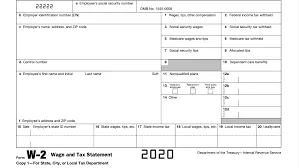
Social Security takes 6.2% of your wages and Medicare takes 1.45%. That is 7.65% gone before any federal income tax is counted. Those payroll taxes do not feed into your refund. Only the federal income tax withheld (box 2 of your W-2) does. If you need the form, see how to get your W-2 online, and three key numbers to check on your W-2 before you file.
Deductions vs. Credits
A deduction shrinks the income you are taxed on. A credit shrinks the tax itself, dollar for dollar. That makes a $1,000 credit far more valuable than a $1,000 deduction. At a 22% bracket, the deduction saves about $220.
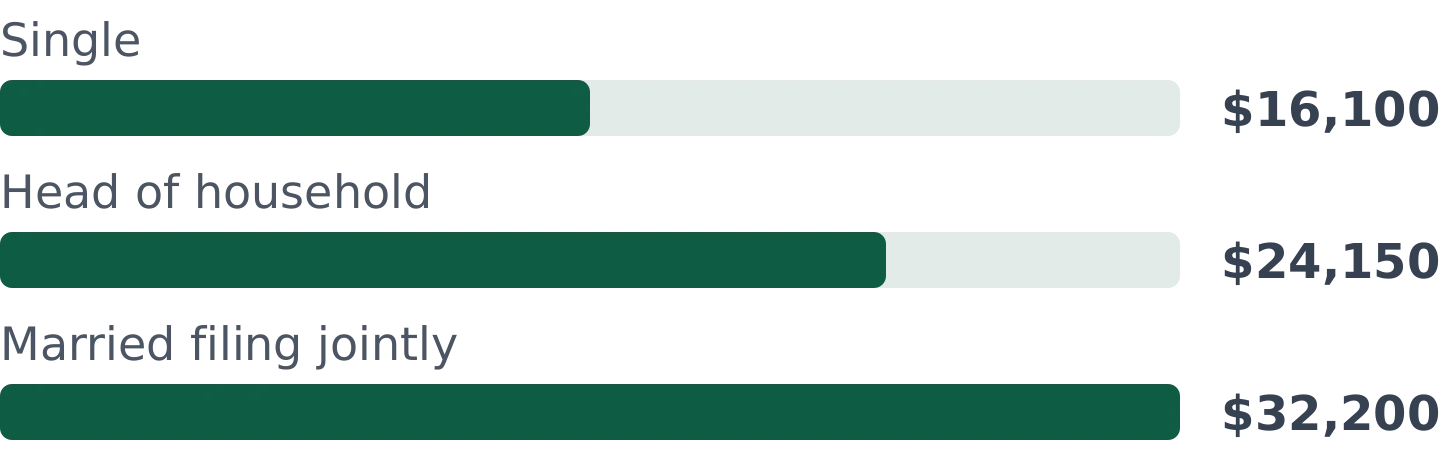
Most filers take the standard deduction. For tax year 2026, which you will file in early 2027, the IRS set it at $16,100 for single filers, $24,150 for heads of household and $32,200 for married couples filing jointly (figures as published by the IRS in October 2025). Itemizing only pays off if your deductible expenses add up to more than that. For more on education-related options, see educational tax deductions and credits.
Refundable vs. nonrefundable credits
This difference decides whether a credit can create a refund on its own.
- Nonrefundable credits can cut your tax to zero but no lower. Any unused amount is lost. Example: the Lifetime Learning Credit, covered in expenses that qualify.
- Refundable credits are paid to you even when your tax is zero. With a $400 liability and a $2,000 refundable credit, you get $1,600 back.
- Partly refundable credits split the difference. The American Opportunity Credit and the additional child tax credit are two examples. See student tax credits.
The best-known refundable credit is the EIC. Our post on the Earned Income Credit and how to qualify covers the rules. Refundable credits count as payments in the formula above, which is why some filers get back more than was ever withheld.
Yes, a refund can be bigger than what was withheld. Refundable credits such as the EIC are paid out even when they exceed your tax. If you wonder whether you might qualify, read what the earned income credit is and how to qualify.
Determining Your Refund Amount
Once your taxable income is set, the tax tables or rate schedules give your tax. Credits come off that figure. Then everything you already paid is subtracted: withholding, estimated payments and refundable credits. A positive result is your refund.
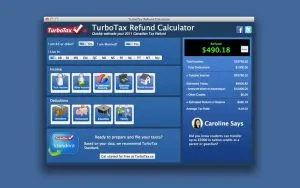
To get a rough number before you file, use the TurboTax TaxCaster refund calculator or the IRS Tax Withholding Estimator. Have your latest pay stub and last year’s return nearby.
The math behind a quick estimate is the same as above: add up your expected payments (federal tax withheld, estimated payments, refundable credits) and subtract the tax you expect after deductions and credits. The Withholding Estimator does it from your pay stub and last return. For a walkthrough of the other tool, see how the TurboTax TaxCaster helps calculate your refund.
Why Your Refund Can Be Smaller Than Last Year
A smaller refund does not always mean you paid more tax. Often you simply had less withheld in advance. Common causes:
- Withholding changed. A new job, a new W-4, a second earner starting work or a raise that changed your pay setup can all alter how much was taken each paycheck. Less withholding means a smaller refund, with the tax bill the same.
- A credit disappeared. A child aging out of a credit, income rising past a phase-out, or a school expense that no longer applies can remove hundreds or thousands of dollars.
- Income went up. Only the dollars above a bracket threshold are taxed at the higher rate, but more income can also reduce credits that phase out.
- Side income with nothing withheld. Freelance or gig earnings have no tax taken out, so extra withholding from your regular job may get used up covering them.
- Rules changed. Brackets and deductions are adjusted every year, and recent legislation changed several provisions. Check the current-year rules rather than copying last year’s numbers.
- One-time items last year. A bigger refund last year may have come from a one-off credit or deduction you did not repeat.
For perspective on the other direction: IRS filing season data through May 8, 2026 showed an average refund of $3,276, up 11.5% from $2,939 at the same point a year earlier (cumulative figures for returns processed so far, not a full-year average). Your own result can differ widely from any average.
Refund amounts depend on your personal facts. Nothing here is a guarantee of a refund, and a large refund just means you lent the government money interest-free during the year. For complex situations, consider a qualified tax professional.
If you comment on this site, our privacy policy explains which details are collected, such as your IP address and browser user agent.
To find the gap in your own case, put last year’s return next to this year’s and compare three lines: total withholding, credits and total tax. The difference usually shows up in one of them.
Recap
Each year your refund depends on the income tax withheld shown on your W-2, any other payments and credits, and the tax you actually owe. The final amount is settled when you file taxes.
Keep in mind that much of what leaves your paycheck never reaches your refund calculation: Social Security, Medicare, state tax and any employer-sponsored insurance premiums. Only federal income tax withheld counts toward it.
When the refund arrives
The IRS says most e-filed returns with direct deposit get refunds in under 21 days. In the 2026 filing season, the IRS reported that more than 80% of refunds issued through March 20, 2026 went out in under 21 days. Returns with errors, identity checks or certain credits can take longer.
To see where yours stands, use the Where’s My Refund tool on the IRS refunds page. It updates once a day, so checking more often won’t tell you anything new.
Sources
- Tax Foundation — 2026 tax brackets — 2026 federal bracket thresholds and standard deductions, tax year 2026.
- IRS — 2026 inflation adjustments — Standard deduction amounts for tax year 2026.
- IRS — 2026 filing season statistics, week ending May 8, 2026 — Average refund of $3,276 through the week ending May 8, 2026.
- IRS — Topic no. 552, tax and credits figured by the IRS — How tax, credits and payments combine into a refund or balance due.
FAQ
How do I change how much tax is withheld from my paycheck?
Fill out a new Form W-4 and give it to your employer, not the IRS. The IRS Tax Withholding Estimator can work out the numbers from your latest pay stub and return and give you a pre-filled W-4. Check it each year, and again after a raise, a new job or a life change.
Is a big refund a good sign?
Not necessarily. It means more was withheld than your tax required, so you gave the government an interest-free loan. A small refund or a small balance due usually means withholding matched your real tax more closely. Which you prefer is a personal call.
Why is my refund different from what I expected?
The IRS may have corrected your return, for example for a math error or a credit it could not verify. If it changed the amount, it sends a notice explaining why. Compare that notice with your copy of the return before you reply or file an amended one.
Does the withholding from my paycheck include Social Security and Medicare?
Those are separate payroll taxes, and they do not count toward your refund. Only federal income tax withheld (W-2 box 2) does. If your W-2 looks wrong, see how to file corrected W-2 forms.
Where do I find my taxable income to see my bracket?
It is on your Form 1040, on the taxable income line, after your deduction is subtracted. Compare that figure with the bracket table for your filing status. Tax software also shows it before you file.
Do states use the same tax brackets?
No. Each state sets its own system. Some use graduated brackets, some a flat rate, and some have no wage income tax. Check your state’s tax agency for its current rates.