Most e-filed federal refunds with direct deposit are issued within about 21 days of the IRS accepting the return. Paper returns take longer, often a month or more. You can follow yours with the IRS Where’s My Refund tool or the IRS2Go app.
That 21 days is the IRS’s own usual estimate, not a promise. Some refunds arrive sooner and some take longer, and no one can guarantee a date for your refund.
Quick answer
- Where to check: Where’s My Refund on IRS.gov or the IRS2Go app.
- What you need: your SSN or ITIN, filing status and exact refund amount in whole dollars.
- How often: once a day is plenty. The data updates overnight.
- When to call: more than 21 days after e-filing, or if the tool tells you to.
How to check your refund status
There are two official ways, and both pull from the same data.
- Where’s My Refund on IRS.gov. Open the tool in a browser and enter your details.
- The IRS2Go app. It’s the IRS’s free mobile app. Look for the refund status option and enter the same details.
Both update about once a day, usually overnight. Checking five times in one afternoon won’t tell you anything new.
The IRS says e-filed returns generally show up within about 24 hours of acceptance. Paper returns take much longer to appear, so give them a few weeks before you worry.
What you need before you check
Have these three items in front of you. A typo in any of them is the most common reason the tool says it can’t find your return.
- Your Social Security number (or ITIN). Use the one that appears first on the return.
- Your filing status. Single, married filing jointly, head of household and so on, exactly as filed.
- The exact refund amount in whole dollars. Take it from your return, not from your own estimate. If you’re unsure how that number was reached, how your IRS income tax refund is calculated walks through it line by line.
What each refund status means
The tool shows three stages.
| Status | What it means | What you do |
|---|---|---|
| Return Received | The IRS has your return and is processing it. | Wait. Check again tomorrow, not in an hour. |
| Refund Approved | Your refund amount is confirmed and the IRS is preparing to send it. A date is usually shown. | Watch your bank account or mailbox around that date. |
| Refund Sent | The money has gone to your bank or been mailed. | Allow a few days for the bank to post it. Checks take longer. |
Sometimes the tool shows a message instead: it needs more information, it has changed your refund, or it asks you to contact the IRS. Read it closely. It usually says what’s wrong, and a letter by mail normally follows.
Why your refund may be late
A delay isn’t always bad news. Here are the usual causes.
- Errors or missing information. Wrong numbers, a mismatched name, or a misspelled Social Security number can send a return to manual review. Comparing your return with your W-2 first helps; see the three key numbers to check on your W-2.
- Identity verification. If the IRS wants to confirm it’s really you, it will send a letter. Your refund waits until you respond.
- Certain credits. By law, refunds that include the Earned Income Credit or the Additional Child Tax Credit can’t be issued before mid-February. For the 2026 season the IRS said it would begin releasing them around February 21, and most arrive by early March if there are no other problems. Our guide to the Earned Income Credit explains the rules.
- Offsets for debts. The government can take all or part of a refund to pay past-due federal or state taxes, child support, or certain other debts. You’d get a notice explaining it. Questions about the debt go to the agency that claimed it.
- Paper filing. Opening, keying in and checking a paper return by hand is slow. Paper refund checks are also being phased out in favor of direct deposit, so a mailed check puts you well past 21 days.
- A W-2 problem. If an employer reports different wages than you did, the IRS may hold the return. If yours is wrong, read how to file a corrected W-2.
- An amended return. Form 1040-X is tracked separately in the IRS’s Where’s My Amended Return tool and takes much longer than an original return.
When to call the IRS
Call 800-829-1040 if it has been more than 21 days since you e-filed, or if Where’s My Refund tells you to contact the IRS. For a paper return, the IRS generally asks you to wait longer, so check its current guidance first.
Before you dial, have your return and the details above at hand. Wait times can be long, so try the online tool first. Calling earlier than that rarely gets you more than the tool already shows.
Can you speed things up?
Somewhat. E-file, choose direct deposit, double-check names and numbers, and file only after every tax form has arrived. If you’re waiting on yours, see W-2 tax form arrival dates. Filing early with a missing form tends to cause the delays you want to avoid.
Want to know roughly what to expect before you file? Try our tax refund calculator. It gives an estimate, not a figure the IRS has agreed to.
What refunds looked like in the 2026 filing season
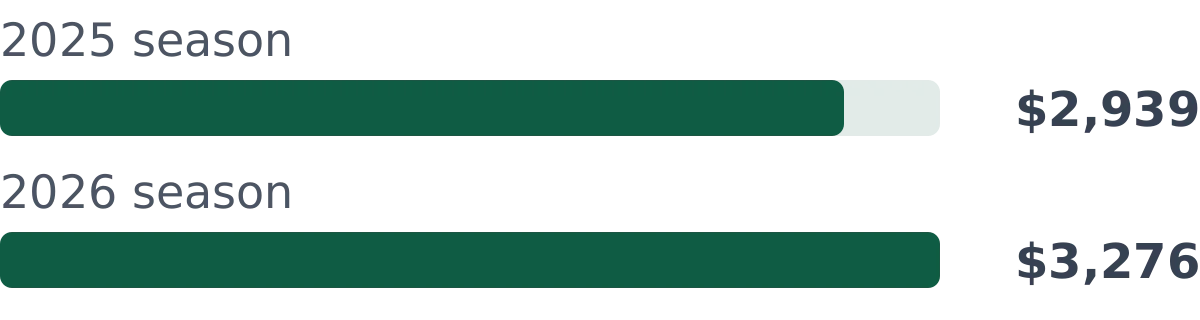
Through the week ending May 8, 2026, the IRS reported an average refund of $3,276, up from $2,939 over the same stretch of 2025. That’s a cumulative figure for refunds processed so far, and it excludes refunds still held under the PATH Act. Your own amount can differ a lot.
Sources
- IRS — 2026 filing season statistics — Average refund of $2,939 (2025) and $3,276 (2026) through May 8 of each year.
- IRS — News release IR-2026-12 — 2026 filing season: most refunds issued within 21 days, with some returns needing extra review.
Refund timing, credit rules and amounts change by tax year. Check IRS.gov or ask a tax professional about your own situation. Nothing here is a guarantee of a refund amount or date.